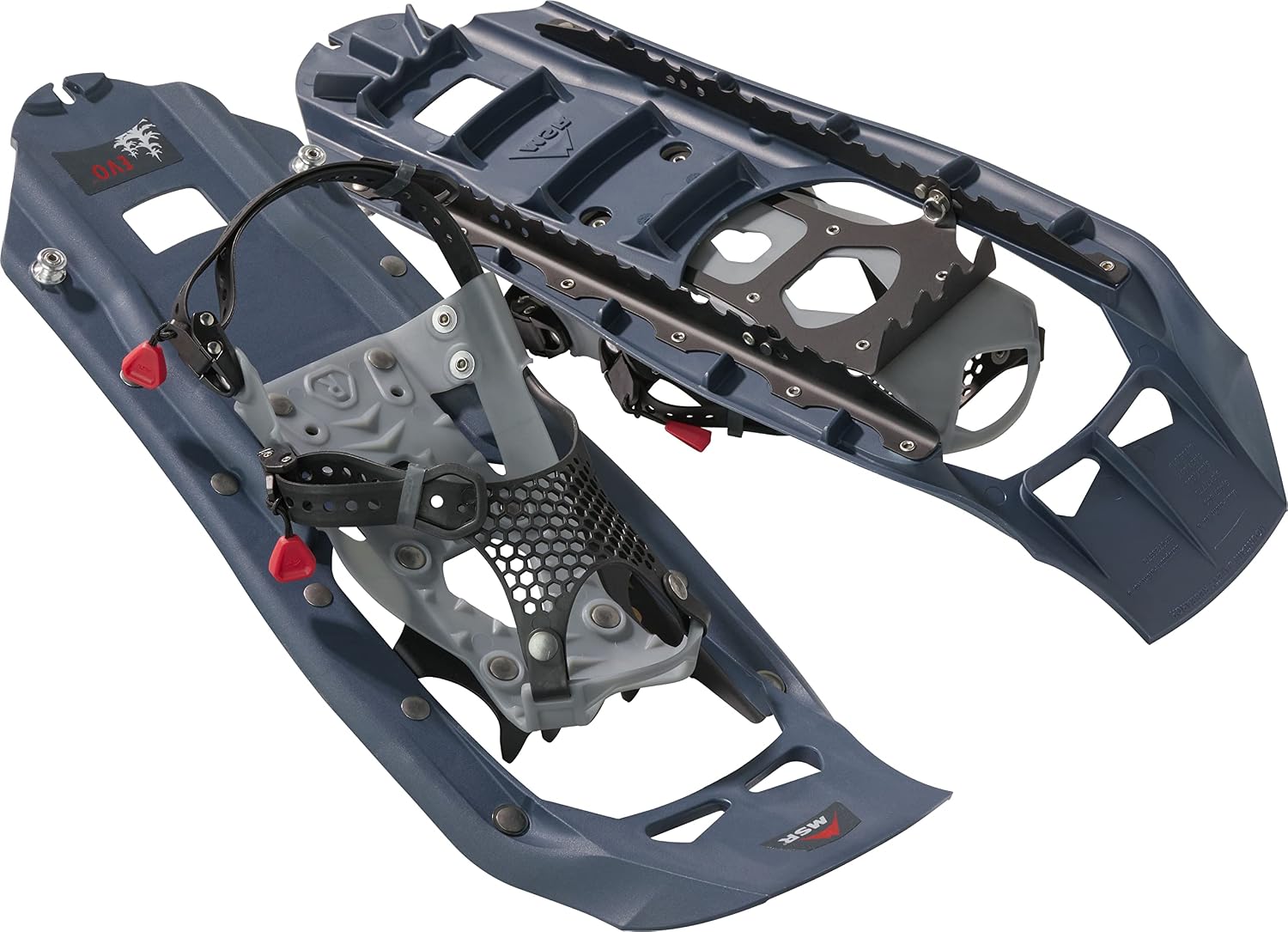
Quick verdict: The MSR Evo Trail delivers an excellent combination of stability, comfort, and ease of use, making it one of the most well-rounded snowshoes for both beginners and experienced winter hikers. It excels on packed trails and moderate terrain, though it’s not built for steep climbs or the deepest powder.
Snowshoeing opens up trails that would otherwise be off-limits once the snow piles up — and the right pair makes the difference between a fun winter outing and a frustrating slog. The MSR Evo Trail has become a go-to recommendation across multiple gear review sites for good reason. This review breaks down what makes it work, where it falls short, and whether it’s the right pick for your winter trails.
Specs at a Glance
| Price | ~$170–200 |
| Size | 22 in. |
| Weight (pair) | 3 lb 8 oz |
| Decking | Stiff plastic, molded fins underneath |
| Traction | Dual parallel traction rails |
| Binding | Two-strap system with large release lever |
| Heel riser | Not included |
Pros and Cons
- Excellent traction from dual parallel rails and molded fins
- Easy on/off, even with gloves on, thanks to the large release lever
- Durable stiff plastic decking holds up well over time
- Great value compared to premium mountaineering snowshoes
- Beginner-friendly without feeling underbuilt
- No heel riser, making steep inclines more tiring
- Smaller 22-inch size limits flotation in deep powder
- Best suited for flat to rolling terrain, not technical backcountry
- Lacks the refined feel of MSR’s premium Lightning Ascent line
What It’s Like to Use
The Evo Trail’s biggest strength is how approachable it is without feeling like a stripped-down budget option. The dual parallel traction rails and molded underside fins provide reliable grip on packed snow and moderate winter trails — exactly the conditions most weekend winter hikers actually encounter, rather than extreme backcountry terrain.
The binding system deserves particular credit: two straps tighten easily over boots, and a large release lever makes putting them on and taking them off remarkably easy, even with bulky winter gloves on. This is the kind of detail that matters far more in practice than it sounds on a spec sheet — fumbling with tiny buckles in the cold is exactly what you don’t want at a trailhead.
Where the Evo Trail shows its limits is on steeper terrain. Without a heel riser, climbing inclines means your calves do all the work rather than getting the mechanical assist that pricier models offer. Likewise, the 22-inch deck — while great for walkability on established trails — won’t give you the flotation you’d want in deep, fresh powder. For the moderate trails most hikers actually walk, though, these trade-offs rarely come into play.
Who Should (and Shouldn’t) Buy These Snowshoes
Buy this if: You’re a beginner or intermediate winter hiker who sticks mostly to packed trails, rolling terrain, or moderate snow conditions. It’s an excellent first pair of snowshoes that won’t feel limiting as your skills improve.
Consider something else if: You regularly hike steep terrain or deep, unconsolidated powder — the MSR Lightning Ascent or a larger backcountry-focused model will serve you better with a heel riser and more aggressive flotation.
MSR Evo Trail vs. the Alternatives
Compared to the budget-friendly Retrospec Drifter, the Evo Trail offers noticeably better traction and a more refined binding system, while the Drifter wins on price for casual or occasional snowshoers.
Compared to the premium MSR Lightning Ascent, the Evo Trail is significantly more affordable but trades away the heel riser and steel crampons that make the Lightning Ascent better suited for steep, technical winter mountaineering.
Frequently Asked Questions
Are the MSR Evo Trail snowshoes good for beginners?
Yes — the simple two-strap binding and large release lever make them especially easy to use, even for first-time snowshoers.
Can the Evo Trail handle deep snow?
They perform best in moderate snow on packed or semi-packed trails. For consistently deep powder, a larger snowshoe with more surface area will provide better flotation.
Do these snowshoes work for steep terrain?
Not ideally — they lack a heel riser, which makes sustained climbing more tiring. They’re best suited to flat or rolling terrain.
What boots work with the Evo Trail bindings?
The two-strap binding system accommodates most winter hiking boots and insulated boots without issue.
👉 See more options in our complete winter gear guide, covering snowshoes, base layers, and gloves for every budget.
The Bottom Line
The MSR Evo Trail earns its reputation as one of the best all-around snowshoes for everyday winter hikers. It won’t replace a dedicated mountaineering snowshoe, but for the vast majority of winter trails, it’s hard to beat the combination of traction, ease of use, and value.
🛒 Check Current Price on AmazonAs an Amazon Associate, we earn from qualifying purchases.